Railay Beach
Railay Beach: The Complete Guide to Krabi's Cliff-Bound Peninsula
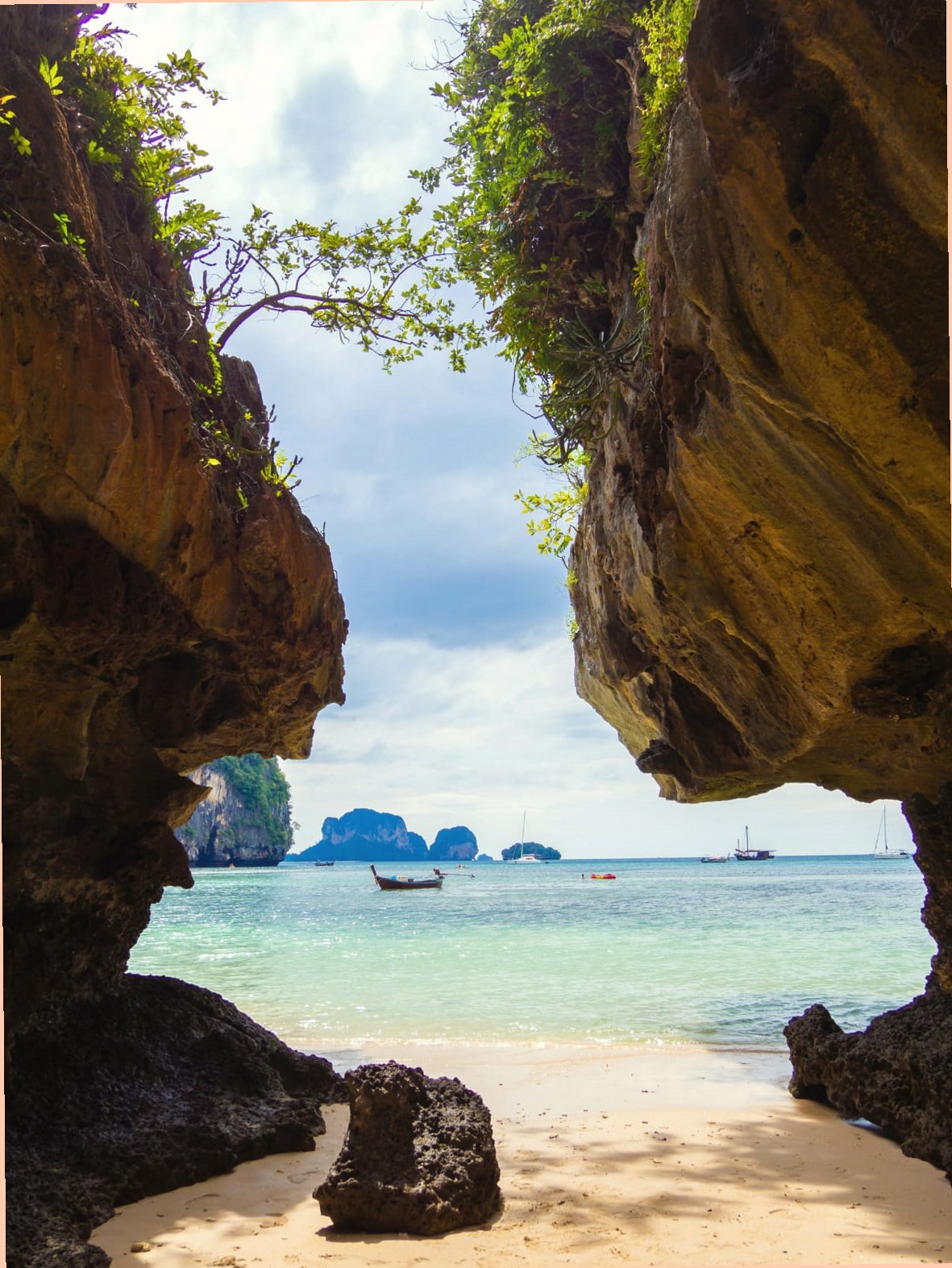
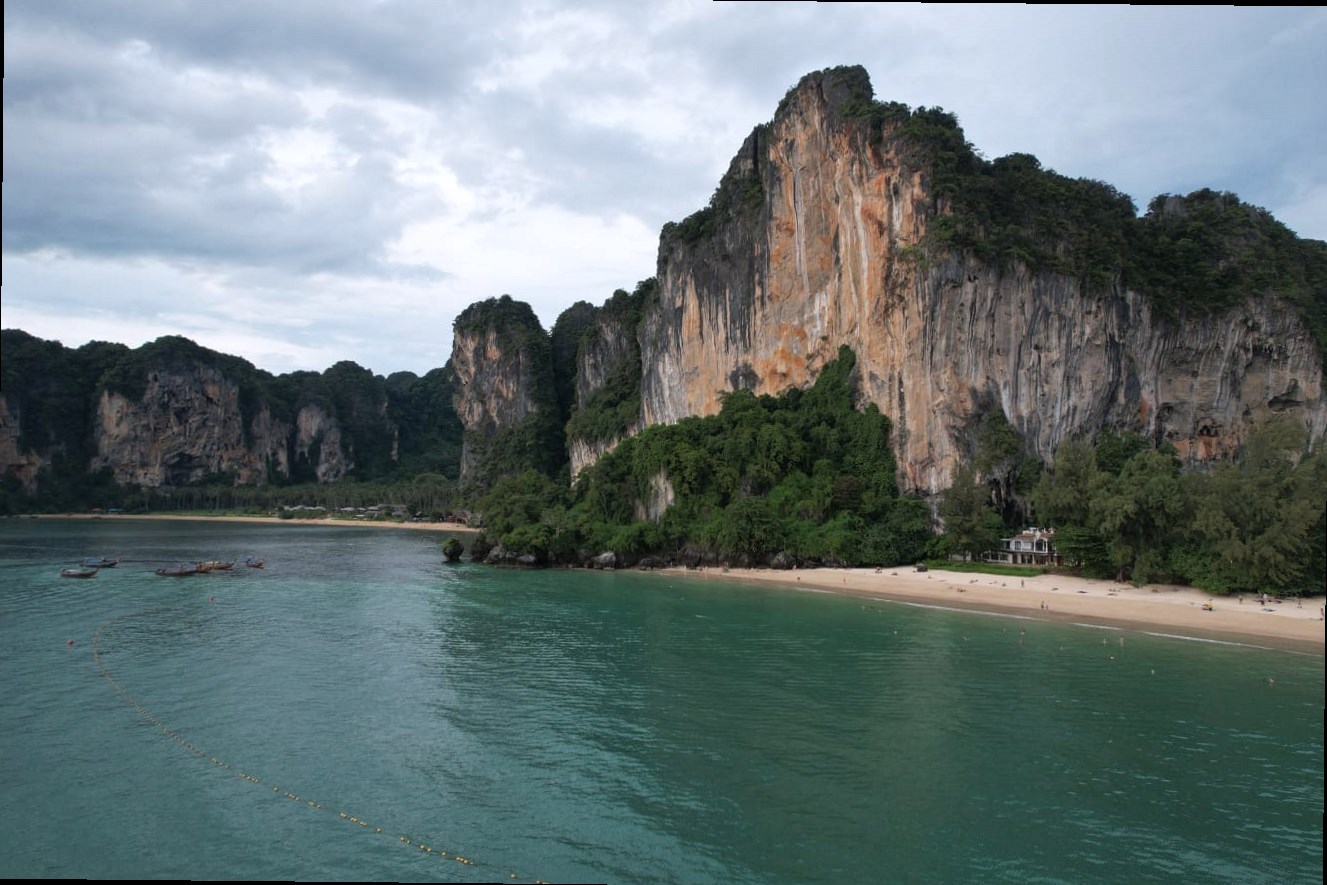
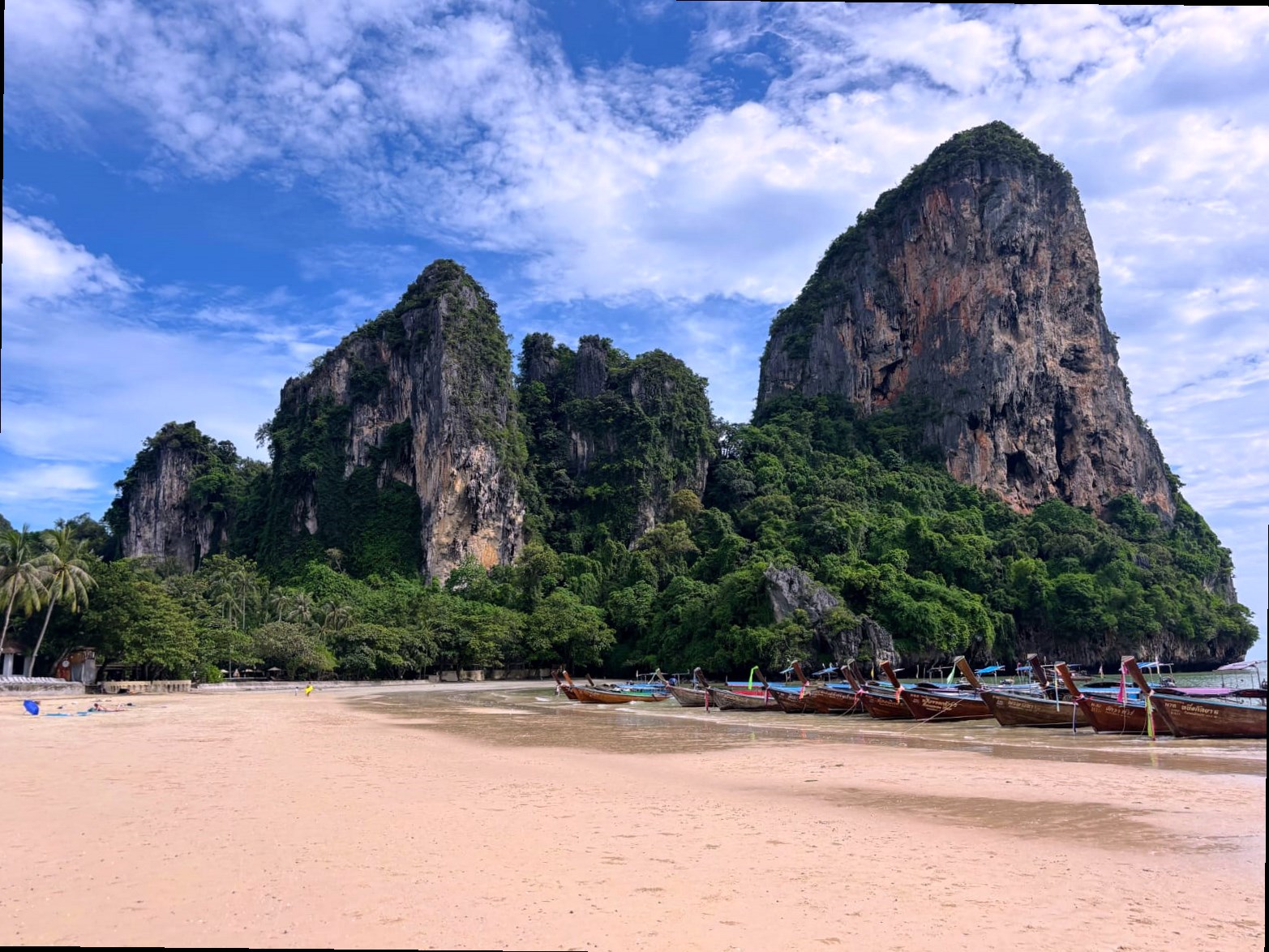
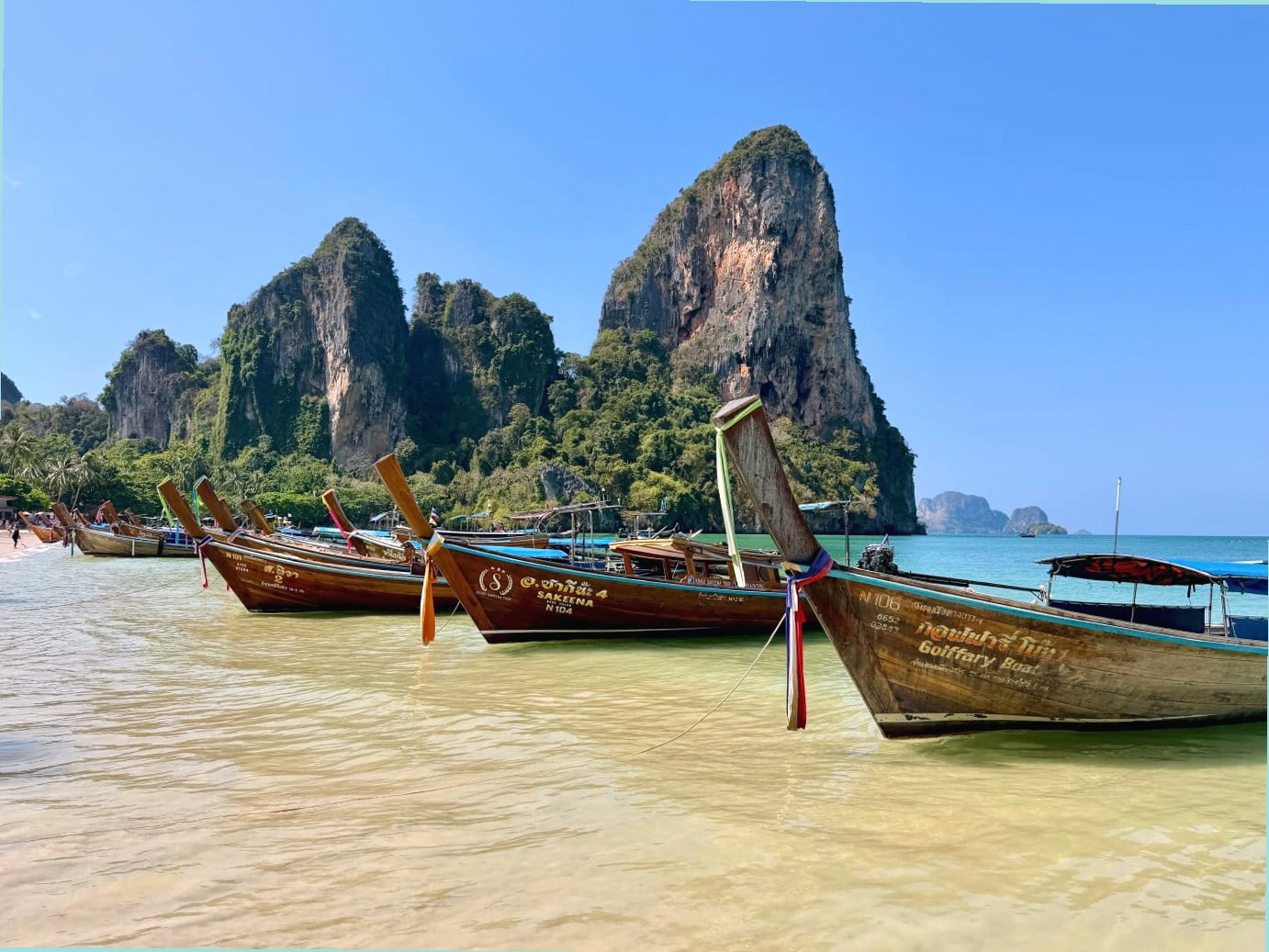
Railay sits in a strange category of its own.
It's technically part of the mainland, tucked onto a small peninsula in Krabi province, yet no road reaches it.
Towering limestone cliffs box the place in on one side and the Andaman Sea does the rest, so the only way in or out is by longtail boat. That isolation changes its vibes from Ao Nang just across the water, even though thousands of day trippers pour in every morning.
This guide pulls together what actually matters if you're planning a visit:
how the four beaches differ, every practical route in, what's worth doing beyond sunbathing, and a few details most guides skip entirely.
The Four Beaches of Railay
Locals and repeat visitors split the peninsula into four distinct zones. Knowing the difference before you arrive saves a lot of confused wandering.
| Beach | Best For | Vibe |
| Railay West | Sunsets, swimming, arriving from Ao Nang | Busy, scenic, boat-lined shore |
| Railay East | Accommodation, food, mangroves | Functional, not for swimming |
| Phra Nang | The postcard beach, the sacred cave | Crowded midday, stunning regardless |
| Tonsai | Climbers, backpackers, quiet | Rockier sand, laid-back, less polished |
Railay West is where most boats from Ao Nang drop passengers, and it's the beach people picture when they think of Railay.
Early mornings here are close to empty, just a handful of people doing yoga or swimming before the day trip boats arrive around 10am. By mid-afternoon, expect 30-plus longtail boats lined along the shore and the sand fully packed. Walk toward Railei Beach Club, further from the boat cluster, for calmer swimming and more breathing room.
Railay East doesn't get much love in most write-ups, and for good reason. The water here is unsuitable for swimming, and low tide reveals mudflats rather than sand.
What it does have is most of the peninsula's accommodation, a floating pier for boats to Krabi Town. And a growing string of relaxed cafes and bars north of the pier that feel worlds calmer than the main Walking Street strip.
Phra Nang Beach earns its reputation.
Sapphire water, fine white sand, and a limestone backdrop that looks almost staged. It sits on the west side, reachable only on foot via a 15 to 20-minute paved path from Railay East. The first stretch you reach, near the fertility shrine, tends to sit in shade and fills with rock climbers and tour groups.
Push further along the sand for the sun-drenched, quieter sections. One quirk worth knowing: hotels have fenced off large sections of this beach for guests only, which creates bottlenecks in the public stretches, especially at high tide when the usable sand narrows considerably.
Tonsai Beach is the quiet cousin.
Reachable by a 15 to 20-minute jungle trail from Railay West or by direct longtail boat from Ao Nang, it trades soft sand for pebbles and rock, particularly at low tide.
Climbers gravitate here for the more technical routes and lower day-tripper traffic. Backpackers use it as a cheaper, mellower base than Railay itself.
Getting to Railay: Every Route Explained
There's no bridge, no road, and no shortcut. Every visitor arrives by water.
Here's how the main routes break down.
From Ao Nang Beach
- Journey time: around 15 minutes
- Cost: 100 baht per person, one way
- Boats run roughly 8am to 6pm, departing once full (usually 8 to 10 passengers)
- Buy tickets at the Ao Nang Longtail Boat Service Club, right on the beach
- You'll land at Railay West
- Buy single tickets rather than a return. Prices are the same either way, and not every boat honors a return ticket bought on the other side, which can leave you waiting longer than necessary
From Krabi Town
- Two pier options: Chao Fah Pier (closer to the town center) or Ao Nam Mao Pier (a bit further out but more frequent and reliable)
- Journey time: 15 to 30 minutes depending on the pier
- Cost: 100 to 150 baht per person
- Boats from Ao Nam Mao typically land at Railay East
From further afield
- Phi Phi Islands: around 90 minutes by ferry or speedboat
- Koh Lanta: 90 minutes to 2 hours
- Phuket: roughly 2 hours
- These routes run less frequently, so booking ahead through a site like 12Go is the safer move
Walking between beaches
Railay West and Railay East connect via a paved path that takes about 15 minutes on foot.
Phra Nang adds another 15 to 20 minutes beyond that.
Tonsai is a separate trail entirely, steep and jungle-covered, running about 20 minutes from Railay West.
Best Time to Visit
November through late March or early April is peak season. Skies stay clear, seas stay calm, and conditions are ideal for both swimming and climbing.
Rock climbing is technically possible year-round, including monsoon months, but routes and boat transfers can get disrupted when the rain sets in heavy.
If you're only doing a day trip, catch one of the first boats out in the morning.
The difference between an 8am arrival and a midday one is the difference between having Railay West mostly to yourself and sharing it with a few hundred other people.
What to Actually Do There
Rock climbing is the headline activity, and it's not an exaggeration to call this one of the best beginner-friendly climbing destinations in the world.
The limestone karsts offer routes starting right from the beach, many with sea views built in. Half-day introductory courses run around four hours and typically include instruction for total beginners.
Serious climbers tend to base themselves on Tonsai instead, where the routes get more technical and the crowds thin out.
The Viewpoint and Lagoon Trail is where the adventurous side of Railay is.
The trailhead sits along the paved path between Railay East and Phra Nang. The climb to the viewpoint itself takes about 15 minutes and involves pulling yourself up using fixed ropes over slippery rock (not a casual stroll).
From the viewpoint signpost, you can continue on to the Lagoon Trail. It is a demanding scramble involving steep rope descents over sharp, muddy terrain.
This isn't for everyone.
Closed shoes are essential; flip-flops and Crocs are a bad idea, and the route should be avoided entirely after rain. Budget 90 minutes round trip, and know there's no alternate exit.
You go back out the way you came in.
Kayaking around the peninsula is an easy, low-effort way to see more of the coastline. Including the uninhabited karst island Ko Rang Non just off Phra Nang. Rentals run about 200 baht for an hour, 300 baht for two hours, up to 800 baht for a full day.
Swimming with bioluminescent plankton at night is one of the more memorable things travelers report doing here. Although it's easy to miss if nobody tells you about it.
Tour operators run private longtail boat trips after dark to spots where the plankton glow on contact, turning every splash into a small burst of blue light in the water.
Spotting wildlife happens almost by accident.
Dusky leaf langurs, an endangered species with distinctive white rings around their eyes, live in the mountainous parts of Railay East. They are most active in the early morning.
Macaques also wander the paths freely. Keep your distance and never feed them; both are wild animals, and the langurs in particular are protected.
Watching the bat exodus at sunset is a quieter, less-advertised experience.
Hundreds of fruit bats stream out of cave openings on Railay East each evening, visible from the stairs near the eastern viewpoint area.
Practical Details Worth Knowing
- Cash matters. There are now a couple of ATMs on Railay and more businesses accept cards than before, but it's still worth carrying baht, especially for boat fares and smaller vendors.
- Walking Street (also called Bobo Plaza) is the hub for food, bars, massage shops, tailors, and climbing outfitters. Most restaurants are open-air and casual.
- Jellyfish stings occasionally happen. The standard first-aid advice posted around the peninsula: don't rub the area, pour vinegar over the sting for at least 30 seconds, and seek help if symptoms worsen.
- Tides change everything. Phra Nang in particular narrows significantly at high tide, and the Lagoon Trail's difficulty shifts depending on how much water and mud is present.
Final Word
Railay appeals to so many because it manages to hold two different experiences at once.
There's the postcard version people expect: dramatic cliffs and calm water and longtail boats bobbing on the shore.
Then there's the more adventurous version. Reserved for anyone willing to hike a rope trail, book a climbing lesson, or head out after dark for glowing water.
Most visitors only see the first half. Spending even one extra day here is usually enough to see the rest.