Koh Kradan: The Complete Guide to Trang's Most Talked-About Beach
Koh Kradan keeps showing up on lists of the world's best beaches.
Travelers who've made the trip out tend to back that reputation up, even the ones with complaints about everything else on the island.
Why? Because this place has a stretch of sand and water so clear it regularly gets compared to the Maldives.
Everything else here, the food, the accommodation, the nightlife, becomes almost secondary..
Here's what actually matters if you're planning a visit.
The Island in a Nutshell
Koh Kradan is within Hat Chao Mai National Park in Trang province, part of a cluster of islands in the Andaman Sea that includes neighbors like Koh Mook and Koh Ngai.
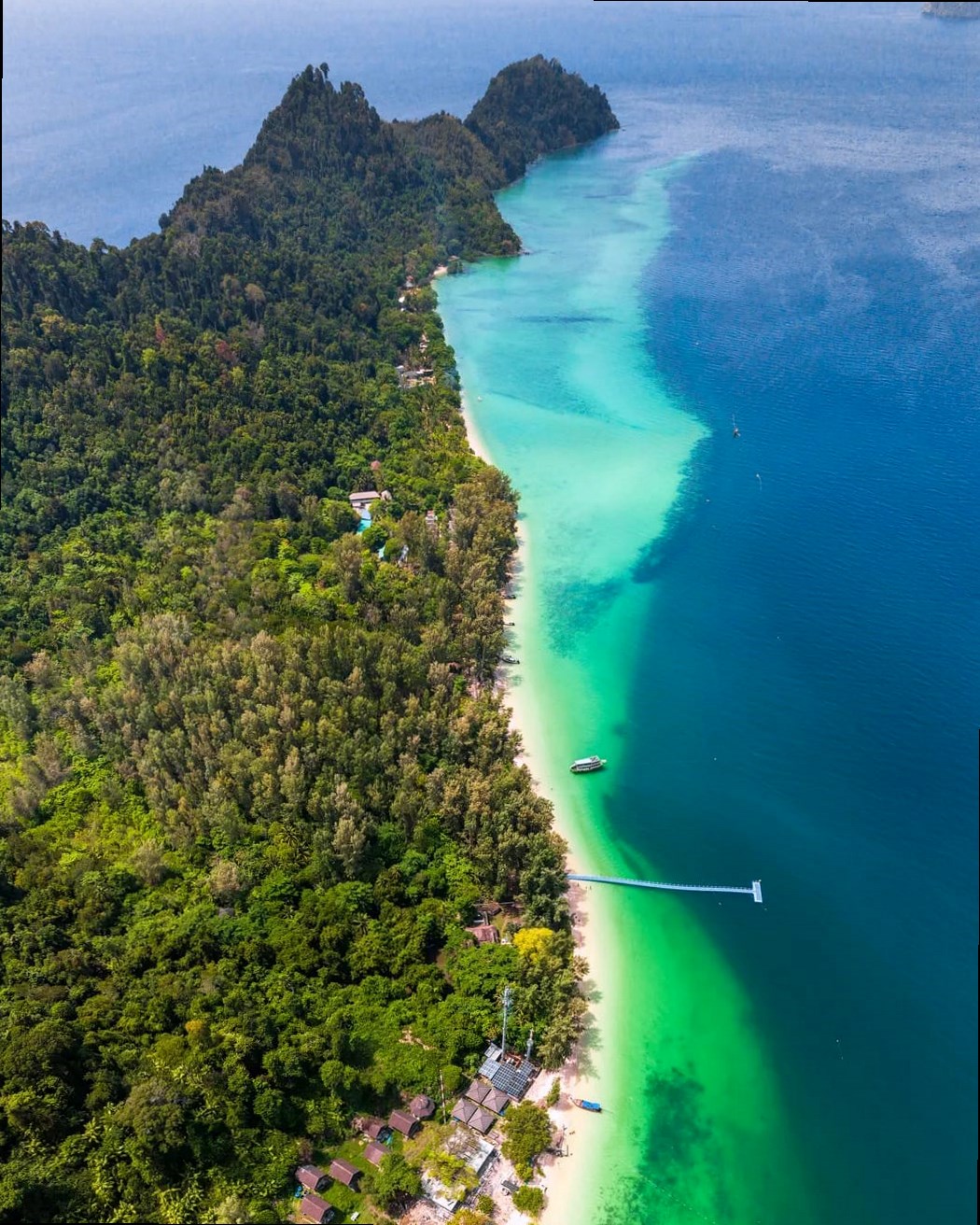
It's tiny, just 1.67 square kilometers, long and narrow with a phenomenal stretch of beach running along its east coast.
There are no roads here. None. No cars, no scooters, no tuk-tuks.
When visitors arrive with luggage, resort staff or the guests themselves push it across the sand on trolleys, sometimes for several hundred meters depending on where they're staying.
That absence of development isn't an accident.
National park protection has deliberately kept Kradan from turning into the built-up version of paradise found elsewhere in Thailand.
What's left is jungle covering most of the land, with just enough clearing for a handful of guesthouses and resorts along the beach.
Getting There: Every Route Explained
Reaching Koh Kradan takes a bit of coordination, since there's no direct flight or ferry straight to the island itself.
By air to Trang, then overland
- Fly into Trang Airport, the nearest airport serving the region
- From the airport, arrange a taxi or minibus transfer to one of two departure piers: Pak Meng Pier or Khuan Tung Ku Pier
- From either pier, catch a longtail boat or speedboat over to the island
By speedboat from other islands
- Regional operators including Bundhaya, Tigerline, and Satun Pakbara run seasonal speedboat routes connecting Koh Kradan directly to Phuket, Koh Lanta, Koh Ngai, and Koh Mook
- These routes only operate during high season, so anyone island-hopping through the region should check current schedules before building an itinerary around them
National park entry
- Every visitor pays a national park entry fee upon arrival, part of what funds the conservation status keeping the island as undeveloped as it is
Best Time to Visit
November through April is the dry season and the clear favorite for a trip here.
It bringing calm seas, clear skies, and the kind of underwater visibility that makes the snorkeling worth the trip on its own.
December through February brings the heaviest crowds within that window.
June through September is monsoon season, when the Andaman turns rough enough that boat services get limited or suspended entirely.
This makes a visit genuinely difficult to pull off.
Temperatures stay consistently warm year-round, generally sitting somewhere between the low seventies and low nineties Fahrenheit.
What the Beach Actually Looks Like
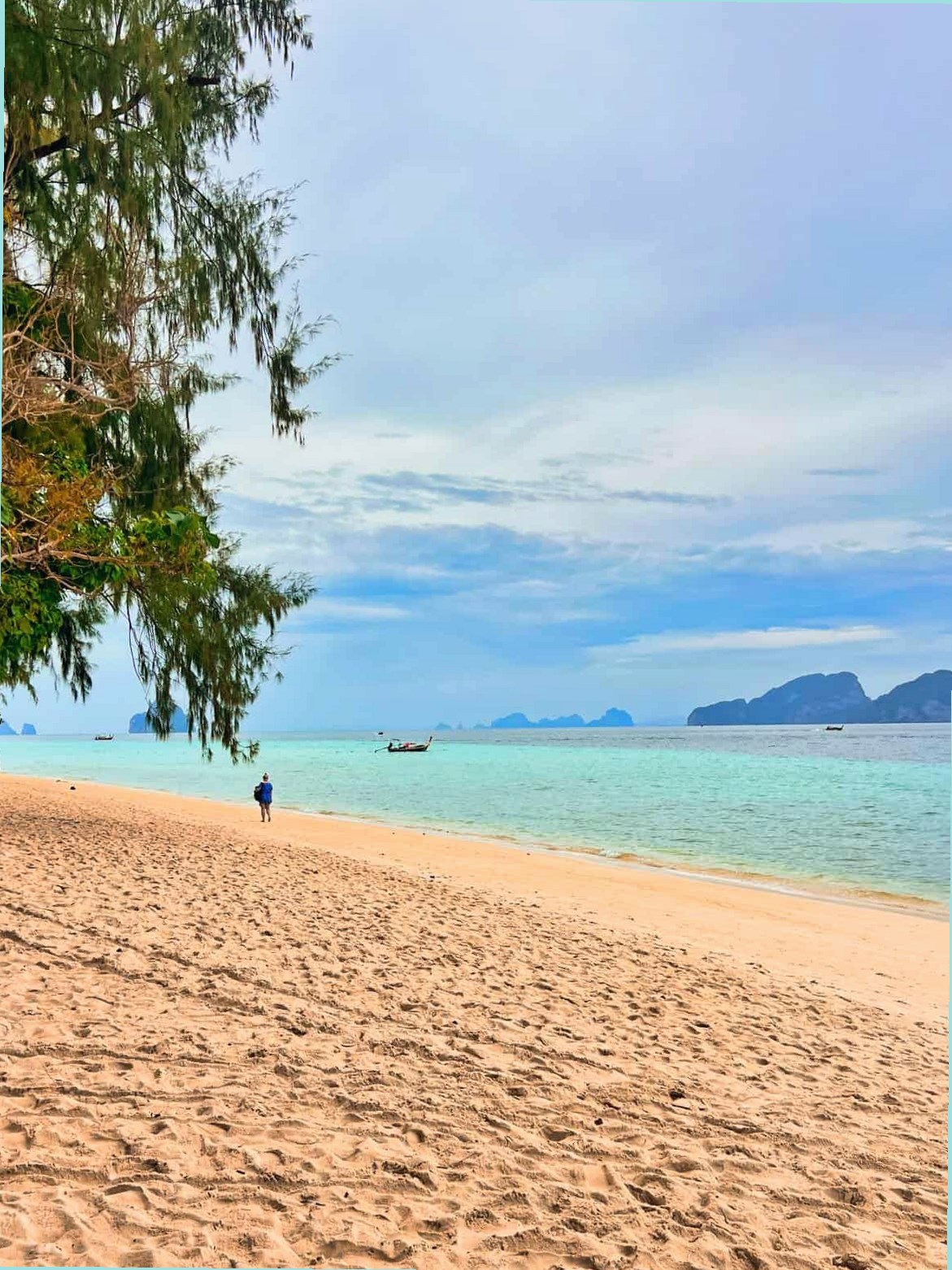
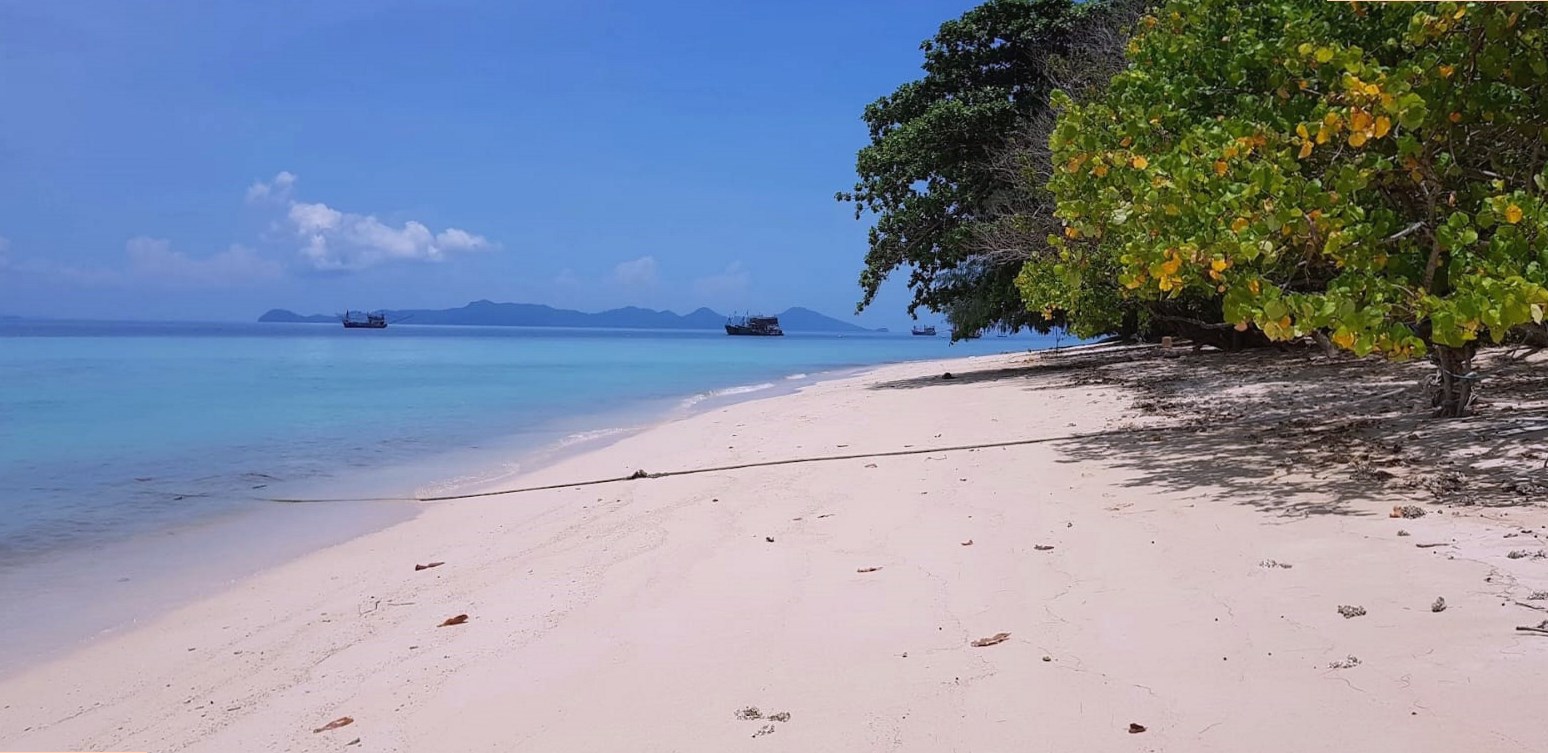
The main beach runs for roughly a mile along the island's east coast.
The water goes knee-deep for a hundred meters or more in places.
It is turquoise and warm enough that wading out feels less like entering the ocean and more like stepping into a swimming pool that happens to stretch toward the horizon.
Walking the full length of the beach, sidestepping the occasional starfish along the way, is one of the better ways to spend an afternoon here.
More so, since the options beyond the sand itself stay fairly limited.
Snorkeling: The Good and the Important Warning
Snorkeling around Koh Kradan draws consistent praise.
Visitors regularly report fish life comparable to destinations like the Maldives, hundreds of fish swarming close enough to interact directly with anyone in the water.
The coral itself gets mixed reviews, described by some as fairly worn down, though the high volume of marine life more than compensates, as per most accounts.
You should remember one detail: there are sea urchins everywhere in the shallows around parts of the island.
Their populations are dense enough that swimmers report coming within inches of their spines while snorkeling.
Just to give idea of how dangerous they are: stepping on one can drive a spine deep enough into a foot that it requires medical removal while the pain can linger for days.
Water shoes are a must need, and staying alert to the seabed rather than just the fish overhead is vital.
What There Is (and Isn't) to Do
Koh Kradan is upfront about being a place with a short activity list.
- Walk the main beach. The full mile-long stretch, best done slowly.
- Snorkel the southern point. Where boats typically stop for the clearest water and most active fish life.
- Visit Sunset Beach. A second, smaller beach on the opposite side of the island, unsurprisingly best timed for the evening.
- Kayak around the island. A full circumnavigation is possible for anyone wanting a proper workout alongside the scenery.
That's basically it.
There's no party scene, no late-night bars, no backpacker buckets changing hands on the sand.
Restaurants and bars exist only as extensions of the guesthouses and resorts present along the beach.
The food there carries an unexpectedly strong Italian presence for such a remote island, a handful of options that keep showing up in visitor write-ups.
The Day Trip vs. Overnight Debate
Day trip vs Overnight trip: there is bit of a debate on this..
Koh Kradan is the most popular day-trip destination out of Trang province.
Plenty of visitors experience it that way, arriving early by longtail boat, spending a few hours snorkeling and walking the beach.
Then heading on to nearby islands like Koh Mook for its famous Emerald Cave.
Arriving early, ideally by 8am, is the consistent advice for beating the bulk of the day-trip boats and getting something closer to an empty beach before the crowds build between roughly 10am and 2pm.
The case for staying overnight opposite.
Quieter mornings and evenings once the day-trip boats clear out reveal a genuinely different island. Anyone wanting to properly experience the silence this place is known for, needs at least one night to see it.
That said, accommodation reviews here run notably mixed.
Budget options often carry disappointing ratings, and pricier resorts don't always deliver enough to justify the jump.
Anyone booking a stay should read recent reviews carefully rather than assuming a higher price guarantees a better experience.
Practical Details Worth Knowing
- No ATMs exist anywhere on the island. Bring enough cash for the full length of a stay, since there's no way to withdraw more once you're there.
- Prices for food and goods run higher than the mainland. Everything has to be brought in by boat, and that logistics cost shows up in what's charged locally.
- Electricity runs on a schedule at some budget guesthouses, often limited to evening and early morning hours rather than running continuously, though pricier resorts tend to offer power around the clock.
- Pack essentials before arriving. With no shops beyond what guesthouses stock, forgetting sunscreen, snorkel gear, or specific toiletries means going without.
Final Word
Koh Kradan isn't trying to be a complete island experience, and it doesn't pretend otherwise.
What it offers is one exceptional beach, water clear enough to rival some of the world's most celebrated coastlines, and just enough quiet once the day-trip boats clear out to make the whole trip feel worthwhile.
It's not a place to build an entire holiday around.
There are minor setbacks: the accommodation can disappoint, the food options are limited, and there isn't much to do beyond the beach itself.
But for the specific thing Koh Kradan does well; walking a mile of near-empty white sand into water so clear it barely looks real.
It remains one of the more talked-about stops in southern Thailand for good reason.