Ao Nang Beach: The Complete Guide to Krabi's Buzzing Coastal Hub
Ao Nang isn't really a beach destination in the traditional sense, even though it has a beach right at its center.
It's better understood as Krabi's main tourist hub, a busy stretch of hotels, restaurants, tour operators, and bars that happens to sit on the coast.
It serves as the launching point for some of the province's most beautiful spots elsewhere. Understanding that distinction upfront changes how a trip here should be planned.
Where Ao Nang Sits and What It Actually Is
Ao Nang sits on Thailand's Andaman coast in Krabi Province.
It is roughly 30 minutes and 24 kilometers from Krabi International Airport, and about 20 minutes from Krabi Town itself.
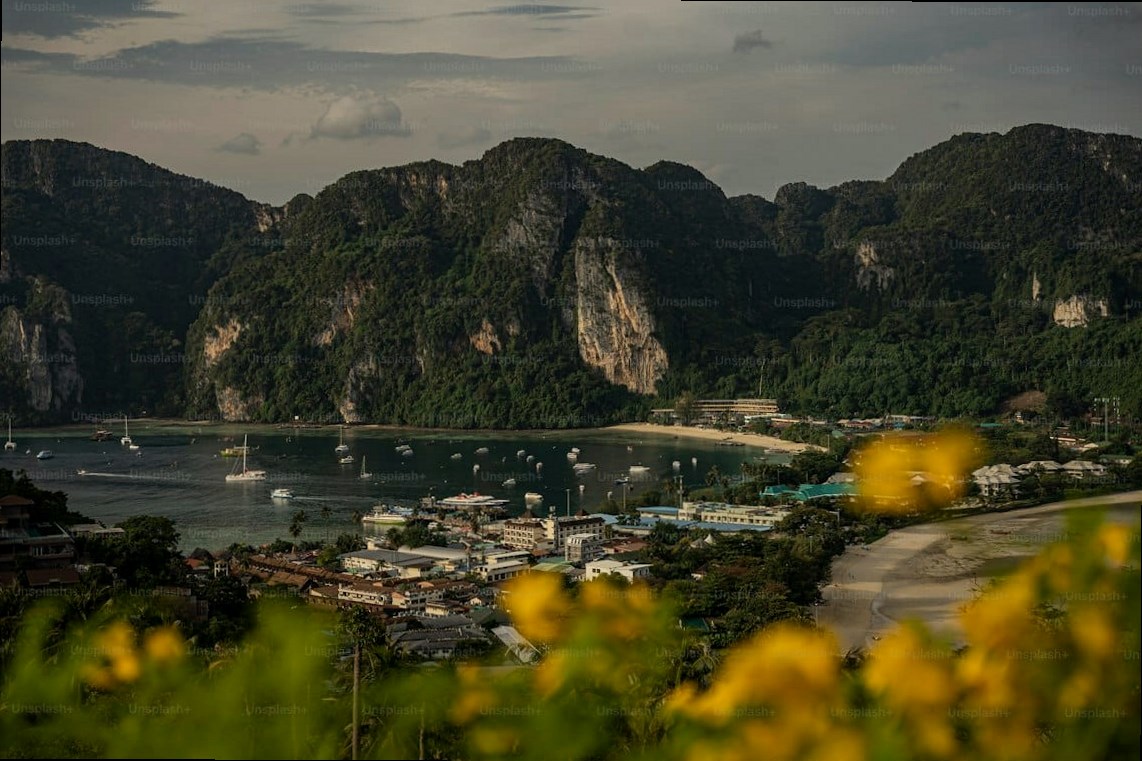
The main beach road runs the length of the town, packed with shops, seafood restaurants, dive centers, and tour desks advertising everything from island hopping to rock climbing.
Honest reviews of the actual sand at Ao Nang Beach tend to be mixed at best.
The beach itself runs long and gets genuinely busy on good weather days.
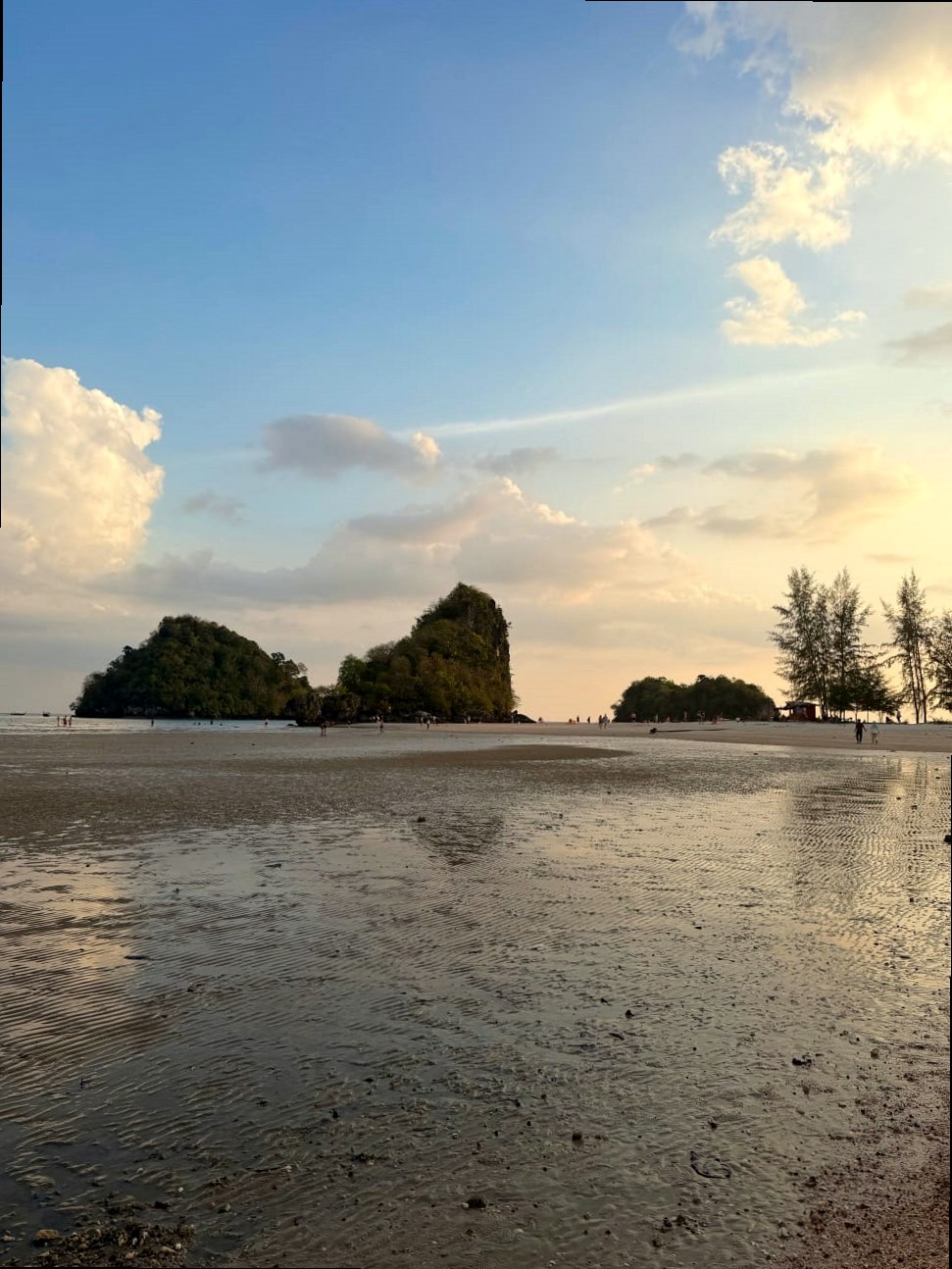
But the texture near the water's edge is often described as muddy rather than the soft white sand people picture when they hear "Thailand beach."
Some visitors report spotting rats along the sand. Solo travelers in particular have noted feeling uneasy leaving belongings unattended while swimming, given how crowded and open the area stays.
None of this makes Ao Nang unpleasant exactly; it just means the beach itself isn't really the main event.
Getting There: Every Route Broken Down
From Krabi International Airport
- Roughly 24 kilometers, about a 30-minute drive
- Airport taxis, pre-arranged transfers, and minibus shuttles all run this route regularly.
From Krabi Town
- About 20 minutes by road
- Regular minibuses and songthaews connect the two, making a stop in Krabi Town on the way in or out an easy addition to any itinerary
From Bangkok
- Direct flights connect Bangkok to Krabi International Airport, the most common route for international visitors
- Overland options exist too, combining a flight or overnight bus to Surat Thani or Krabi Town with a final transfer to Ao Nang
Getting around once you're there
- The main beach road is entirely walkable, with most restaurants, shops, and tour desks sitting within a few minutes of each other
- Scooter rental is popular for anyone wanting to explore beyond the immediate town, including nearby viewpoints and temples
- Longtail boats leave directly from Ao Nang Beach for nearby destinations, making the beach itself function as much as a departure point as a place to swim
Why People Actually Come Here: The Islands and Beaches Nearby
This is where Ao Nang earns its reputation. The town works as a base camp for a cluster of dazzling beaches and islands, each reachable by a short longtail boat ride.
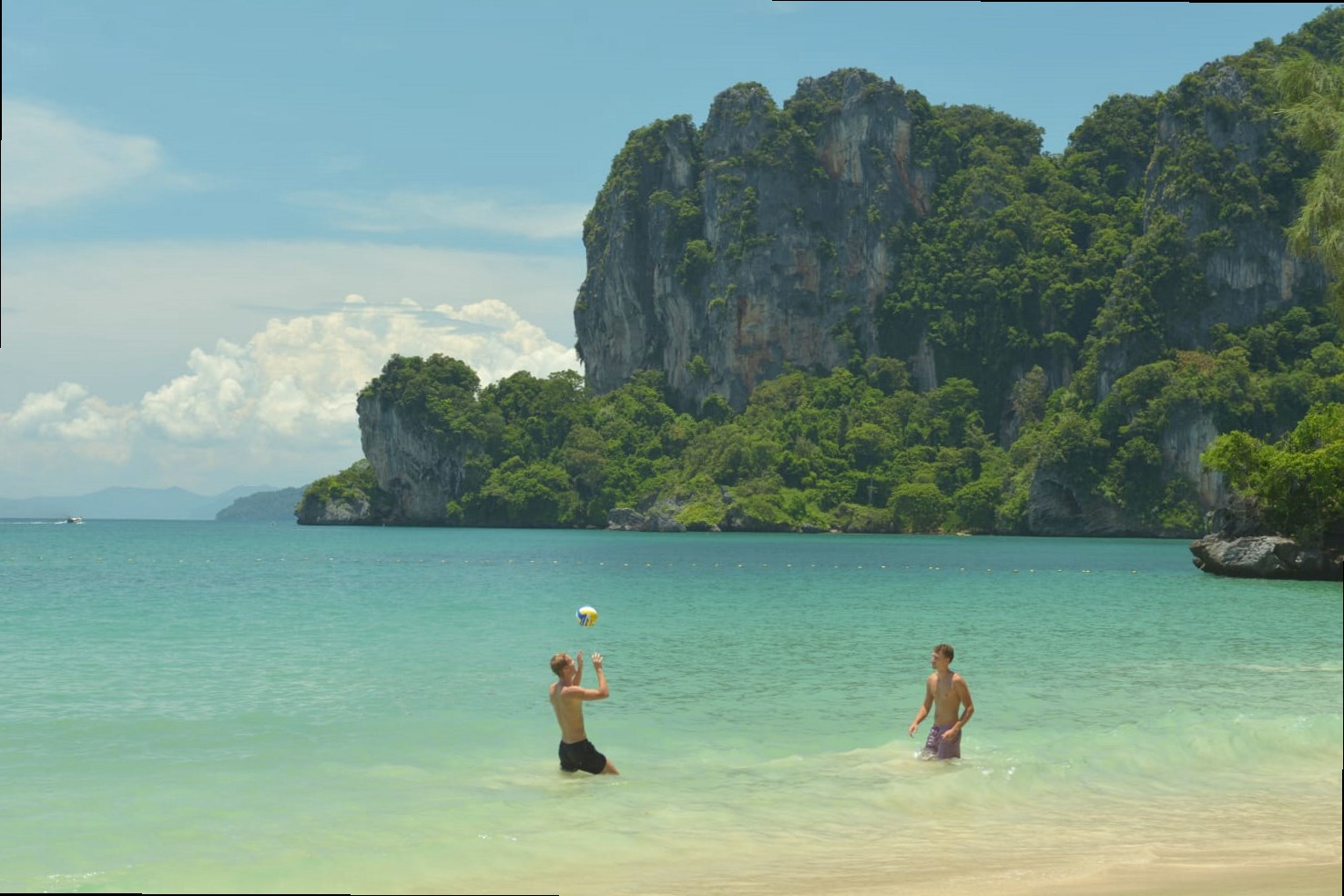
Railay West Beach consistently ranks as one of the area's highlights. It is framed by dramatic limestone cliffs with longtail boats docked along the shore.
The boat crossing from Ao Nang takes about 10 minutes. It departs once enough passengers have gathered, and Railay works equally well as a day trip or an overnight stay on the peninsula.
Phra Nang Beach, connected to Railay by a paved walkway, regularly gets named as the best beach in the entire Ao Nang area.
The area nearest the famous cave gets crowded.
Walking further along toward Ko Rang Nok island, wading through knee-deep water along the way, opens up a quieter, wider stretch of soft white sand that most visitors is worth the extra effort.
Pai Plong Beach, reached via the short Monkey Trail hike through the forest (roughly 350 meters and about 10 minutes, complete with actual monkeys along the route).
It offers a smaller, calmer alternative sandwiched between limestone cliffs.
Facilities here are limited mostly to hotel guests. The public end near the trailhead offers pleasant swimming without the crowds at the main Ao Nang beach.
Hat Noppharat Thara, on the other side of town near the night market, offers pretty sunset views across to the Phi Phi Islands.
Though a stretch near one end can carry an unpleasant smell where a river empties into the sea so avoid that while swimming.
Maya Bay and the Phi Phi Islands are further out.
They are typically visited on a full-day boat tour from Ao Nang.
Maya Bay's reputation as one of the most beautiful beaches on the planet holds up visually: white sand, turquoise water, cliffs on every side. Swimming is restricted to ankle or knee depth, with rangers actively enforcing the limit.
Years of closure allowed the ecosystem to recover from overtourism. The blacktip reef shark sightings in the shallows have become common enough that even casual day-trippers mention spotting them.
Bamboo Island, another common stop on the same island-hopping circuit.
It has turquoise water and white sand with a smaller roped-off swimming area, plus an unexpectedly well-stocked snack kiosk tucked into the trees at the island's center.
What Fills a Day in and Around Ao Nang
Island hopping is the single most popular activity here, and nearly every tour desk along the main road offers some version of it, typically bundling Railay, Phra Nang, and a few Phi Phi stops into one full-day trip.
Rock climbing draws a serious following given the limestone cliffs scattered throughout the region, with Railay and Tonsai Beach both established as genuine international climbing destinations.
The Monkey Trail hike offers a quick, self-contained adventure without needing a boat at all, winding through forest with wooden steps and boardwalks before depositing hikers at Pai Plong Beach.
Kayaking through mangroves rounds out the adventure-focused activities, a calmer alternative to climbing or open-water swimming for anyone wanting to explore the coastline at a slower pace.
Evening fire shows have become something of a signature Ao Nang experience. There are multiple beachfront bars and resorts hosting performers most nights. Shows in front of well-known beach clubs and near the main steps by the Ao Nang Long Tail Boat Service Club tend to be the most popular, typically kicking off in the early evening and running again later at night.
The Ao Nang Landmark Night Market gives visitors a solid evening option beyond the beach bars, with food stalls, shopping, and the kind of casual browsing that pairs well with a day spent island hopping.
Best Time to Visit
The best time to come is the high season.
It runs November through March, bringing sunny skies and calm seas that make both the beach itself and the boat trips out to Railay and the Phi Phi Islands far more enjoyable.
Outside this window, rougher seas and heavier rain can disrupt island-hopping plans significantly.
Anyone building a trip around those excursions specifically should lean toward the dry season window.
Practical Notes Worth Knowing
- Public toilets exist along the main beach and at most nearby beaches, though cleanliness varies and toilet paper isn't always provided; it's worth carrying your own.
- Signs warning about pickpocketing appear at several points along Hat Noppharat Thara, a reasonable cue to stay alert with belongings in busier areas.
- Solo travelers wanting to swim without worrying about unattended belongings may find quieter, more contained beaches like Pai Plong or the far end of Phra Nang a better fit than the main Ao Nang stretch itself.
- Jet skis and parasailing are restricted in parts of this region, keeping the water noticeably calmer than more developed Thai beach towns.
Final Word
Ao Nang is a convenient, well-connected base rather than a beach destination in its own right.
The town delivers on food, nightlife, tour logistics, and easy access to spectacular beaches just a short boat ride away.
Anyone expecting the main Ao Nang stretch itself to rival Railay or Phra Nang will likely be disappointed. However, anyone treating it as the launchpad it's designed to be will find it does that job about as well as anywhere in Krabi.